
Dear Artist, Please Read This Before You Need A Lawyer
I know y'all would rather be working, but this is important.

For the past 25 years, most of the artists who come to me only show up after something has already gone wrong. Please stop that shit.
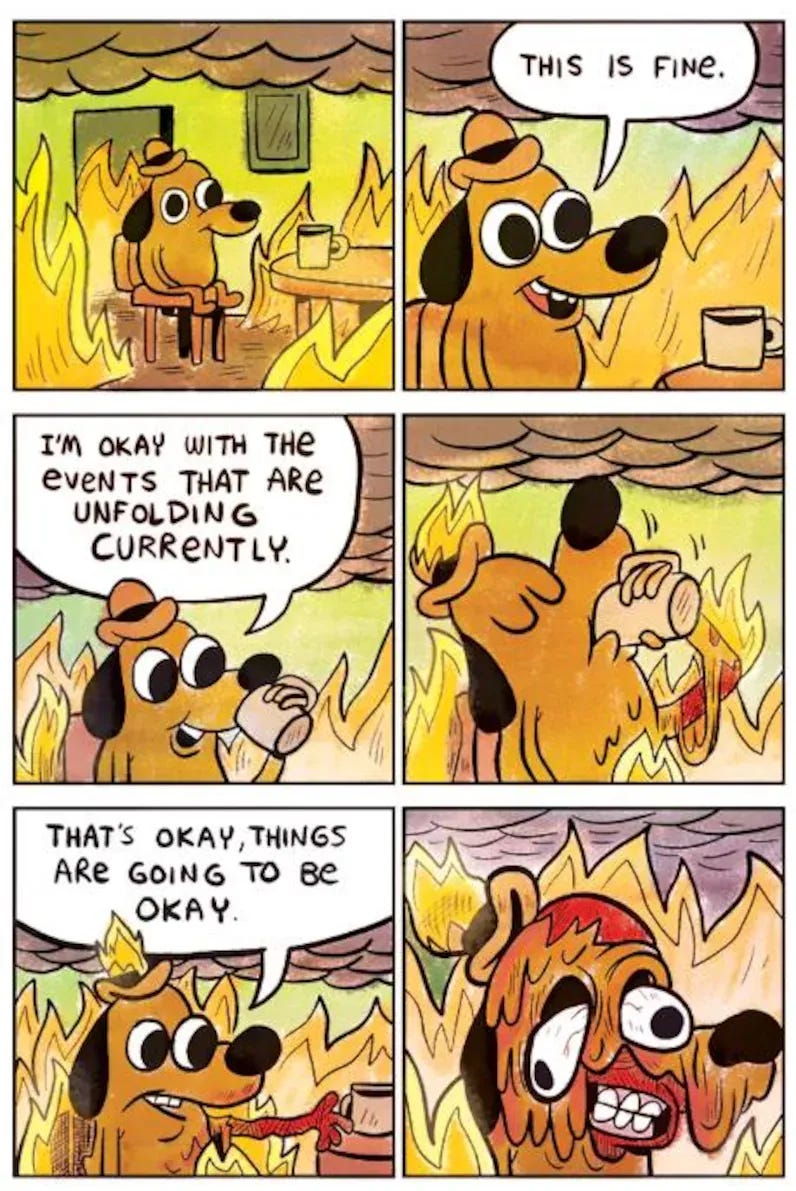
When I taught high school, I learned this phrase: Your lack of preparation does not create an emergency for me. With lawyering, it’s the complete opposite. Artists tend to find me after they’ve created an emergency. Whether you choose to engage with it or not, your creative work has legal infrastructure. It’s better to understand the structure rather than discover it when the house is already on fire.
Here’s my top 10 list of things artists should understand, in plain English:
1. Copyright exists the moment you make something
You don't have to register it, mail it to yourself, or put a © symbol on it. The moment a work is fixed in a tangible medium, it’s yours. It doesn't matter if it's surface design on fabric, a poem you wrote, a painting, or an audio file of a beat you made (terms of service on platforms are a whole ‘nother situation though). Anyhoo, copyright registration matters because you can't sue for statutory damages or attorney's fees without it. That is what gives you some real leverage.
2. Owning the physical work and owning the copyright are two totally different things
Selling a piece of art does not automatically transfer the copyright. The buyer owns the object, but you still own the reproduction rights, licensing rights, derivative rights, all that ish. This can be very confusing. You can transfer some or all of those rights, but it needs to be explicit and in writing. A simple bill of sale can include a line specifying exactly what the buyer is and isn't getting. Most artists never do this, which means you're either accidentally giving away rights you meant to keep or potentially losing licensing income because the buyer assumed they owned everything.
3. "Work for hire" means you don't own diddly squat
If you create something as an employee, or under a work-for-hire agreement, whoever hired you owns the copyright. I don't have the emotional fortitude to tell you about all the artists I know who’ve signed these agreements, and the visual artists who’ve signed away rights for commercial commissions without reading carefully.
4. A contract doesn't have to be formal to be binding
If you have an email exchange with another party and you both agree to terms, that can be an enforceable contract. A DM can be evidence of a contract. This can protect you when someone tries to rescind an agreement, but it also means you could accidentally commit to things you didn't mean to.
5. "Fair use" is a legal defense, not a permission slip
There's no rule that says using under 30 seconds of music or 10% of an image is automatically fair use. Fair use is a four-factor legal defense that you raise after you've been sued, and it's evaluated on a case-by-case basis.
6. Licensing is basically renting your copyright
When you license a work, you're granting permission for it to be used under specific conditions, such as territory, duration, medium, or exclusivity. You keep ownership. This is how artists can earn from the same work many times over. Most artists either don't do this at all or do it without a written agreement specifying the terms.
7. "All rights reserved" licenses may not always be what you want
Posting your work online isn't the same thing as giving it away. When you post art online with no licensing statement, the default copyright applies. Technically, no one can use it without your permission. However, if you want to share your work for educational use or attribution-only use, you can customize that with a Creative Commons license. With music, the same principle technically applies, but the music business has an added layer of complexity. That's because a single song typically has two copyrights: one in the underlying composition and one in the sound recording (the specific performance/production). You can own both, or they could belong to different people.
8. Moral rights are real but limited in the U.S.
Under VARA (the Visual Artists Rights Act), visual artists have limited rights to attribution and to prevent destruction of certain original works. It also covers the right to prevent intentional distortion or mutilation of a work that would harm the artist’s honor or reputation. However, this only applies to qualifying fine art. It will not fly for reproductions, commercial work, and definitely not once you've waived those rights in writing (which many gallery and residency agreements ask you to do, buried in the bloody fine print).
9. Trademarking your name or brand is different from copyrighting your work
If I had a dollar for every time I've had to explain this, I’d be chillin’ on a private beach sipping a pina colada right now. Copyright protects creative expression. A trademark protects a name, logo, or phrase. If you're building a brand, for example, a trademark is what keeps someone else from operating under that name in the same space.
10. NDAs and exclusivity clauses in gallery/commercial contracts could limit your entire practice
Language like "works in a similar style" or "works created during the term of this agreement" can be interpreted very broadly. Artists sign these without realizing they've agreed not to show related work elsewhere, or that the gallery has first-refusal rights on everything they make, sometimes up to a year.
Please don’t sign the first contract you’re given. Clauses are negotiable. You can push back on language that doesn’t work for you before signing.
Disclaimer: I'm a lawyer, but I'm not your lawyer. This article is for informational purposes only and does not constitute legal advice. Laws vary by jurisdiction and individual circumstances. So make sure to consult a licensed attorney for guidance specific to your situation.
Questions about your own work?
Every artist’s situation is different. If this post raised questions about your own creative work, you can book a one-on-one session with me here.
A Note on Sources: Most of these citations link to the Cornell Law School Legal Information Institute (LII). If you've never used it, bookmark it now. It's a free, publicly accessible database of U.S. federal and state law. These are the same statutes that lawyers and judges read, in plain, searchable form with no paywall. Most legal research databases cost hundreds of dollars a month. LII exists to make the law accessible to non-lawyers. When you go to an LII link, you're reading the actual statute.
Sources
17 U.S.C. § 102 Subject matter of copyright: In general
17 U.S.C. § 412 Registration as prerequisite to certain remedies
17 U.S.C. § 411 Registration and civil infringement actions
17 U.S.C. § 202 Ownership of copyright as distinct from ownership of material object
17 U.S.C. § 101 Definitions, including "work made for hire"
U.S. Copyright Office Circular 30: Works Made for Hire
Cornell LII, Contract (general contract formation)
17 U.S.C. § 107 Limitations on exclusive rights: Fair use
U.S. Copyright Office Fair Use Index
17 U.S.C. § 204 Execution of transfers of copyright ownership
Creative Commons, About CC Licenses
17 U.S.C. § 106A Rights of certain authors to attribution and integrity (VARA)
U.S. Copyright Office, Waiver of Moral Rights in Visual Artworks
We at the Graphic Artists Guild in NYC worked very hard in the ‘80s to get copyright law enacted and enforced. We “trained” art directors at ad agencies not to expect to own “all rights” of our work.
But just as things were going somewhere, the computer entered our lives. Painted illustration was out; art was easy to steal off the internet.
We tried. Sigh.
Really useful article, good to be reminded of the basic facts. I'm in the UK but the rules are very similar here. I like the tip about physical ownership not conferring copyright. It is obvious when you point it out, but I hadn't thought of it that way before. Thanks.